
The Role of Brand Consistency on Instagram
Brand consistency on Instagram is defined as the deliberate repetition of visual identity, voice, and messaging across every post, Story, and Reel to create an instantly recognizable presence. Brand recognition increases by up to 80% when creators maintain consistent colors, fonts, and aesthetics. That number reflects a simple truth: people cannot follow what they cannot recognize. The role of brand consistency on Instagram goes beyond aesthetics. It shapes how the algorithm treats your content, how quickly audiences trust you, and how often that trust converts into real growth. Customers typically need 6–10 touchpoints before they take action, and consistent branding multiplies conversion rates by 3–5 times across those interactions. With 86% of consumers preferring authentic brands on social media, the brands that win on Instagram are the ones that show up the same way, every time.
How does brand consistency influence Instagram's algorithm and audience behavior?
Instagram's algorithm rewards predictability. Inconsistent posting confuses the algorithm, reducing your reach and slowing follower growth. The algorithm interprets irregular activity as low relevance, which means your content surfaces to fewer people over time. Algorithmic momentum is fragile, and once you lose it, rebuilding takes weeks.
The recognition window on Instagram has shrunk to under one second. A viewer scrolling their feed decides in a fraction of a second whether to stop or keep moving. If your visual cues do not signal your brand immediately, that impression is gone. This is why consistent brand identity is not a design preference. It is a performance requirement.
Audience behavior follows the same logic. 62% of consumers trust user-generated content more than brand-produced content on Instagram. That statistic does not mean polished content is dead. It means your brand identity must be strong enough to remain recognizable even in raw, low-fidelity formats like Reels and Stories. A fitness coach who always uses the same color overlay and caption structure on their workout clips builds recognition that survives even casual, phone-shot content.
The 80/20 content rule is the clearest framework for balancing engagement and promotion. 80% of your content should deliver value, and 20% can promote your product or service. Over-promotion pushes followers away and signals low quality to the algorithm. Brands that follow this ratio hold audience interest longer and see steadier engagement over time.
- Post with intent: Every post should fit your brand's visual and voice system, not just fill a calendar slot.
- Stay predictable: Your audience should be able to recognize your content before they see your handle.
- Balance your content: Value-first content builds the trust that makes promotional posts actually convert.
- Protect your reach: Gaps in posting break algorithmic momentum and take time to recover.
Pro Tip: If you miss a posting day, do not double-post the next day to compensate. Resume your normal schedule. Doubling up looks erratic to both the algorithm and your audience.
What constitutes a consistent visual identity on Instagram?
Visual consistency is not about posting identical layouts. Visual systems outperform visual repetition because they give your content room to breathe while keeping recognition intact. A visual system defines the rules: which colors appear in every post, which fonts carry headlines, how much white space surrounds text, and where graphic accents live. Within those rules, each post can look fresh without losing brand recognition.

The practical components of a visual system break down into four areas.
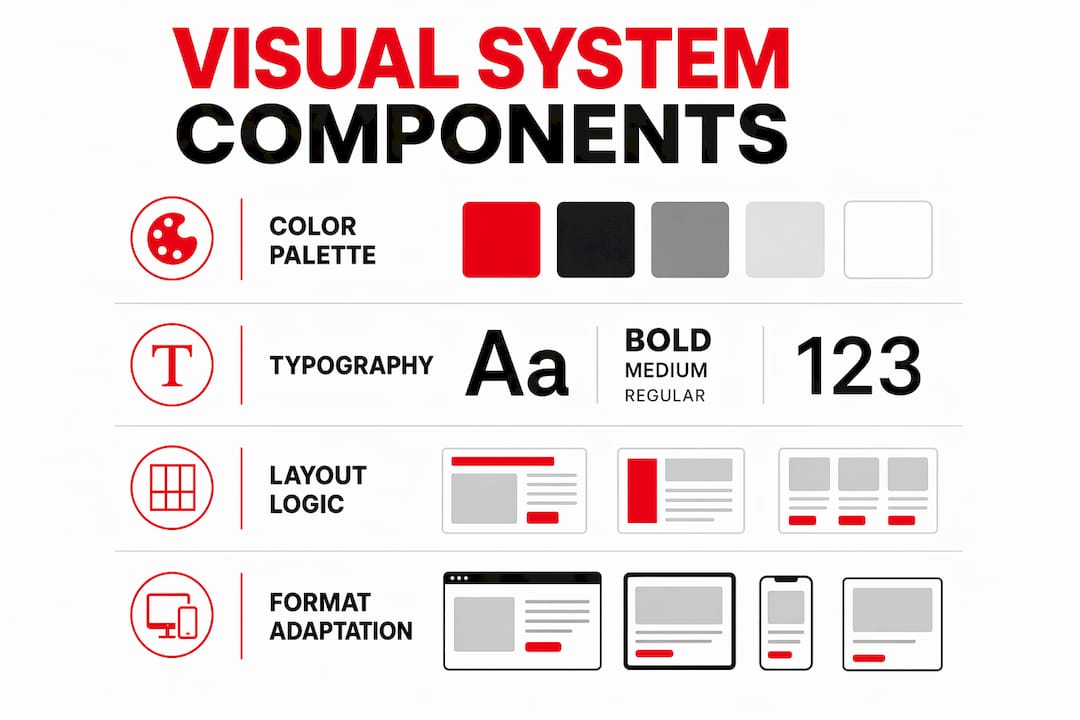
Color palette: Choose two to four brand colors and use them in every post. Your primary color should appear in at least one element per frame. Secondary colors add variety without breaking the system.
Typography: Pick one headline font and one body font. Use them consistently across feed posts, Stories, and Reels cover frames. Font changes are one of the fastest ways to make a grid look disjointed.
Layout logic: Brands should define repeatable layout logic, including fixed headline areas, margin rules, and component blocks. This means a new designer or an AI tool can produce on-brand content without starting from scratch every time.
Format adaptation: Reels, Stories, and Carousels each have different dimensions and viewer behaviors. Your visual system should include format-specific templates that carry the same color, font, and layout rules. A Reel cover frame should look like it belongs to the same brand as your carousel slides.
| Content type | Key visual consistency element | Common drift risk |
|---|---|---|
| Feed posts | Color palette and typography | Switching fonts or filters per post |
| Stories | Brand color overlays and sticker placement | Using default Instagram fonts |
| Reels | Cover frame design and caption style | Ignoring cover frames entirely |
| Carousels | Slide layout logic and margin rules | Inconsistent text sizing across slides |
Pro Tip: Build your templates in Canva or a similar design tool and lock the brand colors and fonts. Share the template file with every creator on your team so no one works from a blank canvas.
How to maintain consistent brand voice and messaging on Instagram?
Brand voice is the personality behind your words. Tone is how that personality shifts depending on context. A fitness brand might have a voice that is direct and motivating. Its tone on a Reel about a tough workout might be intense, while its tone on a recovery post might be calm and encouraging. The voice stays the same. The tone adapts.
Instagram's dominant user intent is emotional connection. The platform rewards visual storytelling and authenticity over formal, corporate messaging. This means your brand voice on Instagram should feel human, even when it is carefully constructed. A brand that writes captions the way a real person talks will always outperform one that writes like a press release.
Analyzing your top-performing captions for sentence length, humor, direct address, and avoided topics creates a usable voice guide. Pull your ten best-performing posts from the last 90 days. Look for patterns: Do you use short sentences or long ones? Do you ask questions? Do you use humor or stay serious? Those patterns are your voice guide in raw form. Formalize them into a one-page document that any creator or AI tool can reference.
- Sentence length: Decide whether your brand writes in short punchy lines or longer explanatory sentences, then stick to it.
- Direct address: Determine whether you speak to your audience as "you," "we," or by a community name.
- Humor level: Define whether humor is part of your voice and what kind fits your brand.
- Avoided topics: List subjects your brand never touches, even when they trend.
- Signature phrases: Identify two or three phrases your brand uses consistently across captions and Stories.
Defining a brand voice with specific communication patterns enables consistent messaging across multiple creators and AI tools. This matters more as teams grow. Without a written voice guide, every new creator introduces drift. With one, even AI-generated captions can sound like your brand.
Pro Tip: Feed your voice guide into any AI writing tool you use for captions. Paste the guide as context before asking for a draft. The output will match your brand far more closely than a generic prompt.
What practical strategies build and sustain brand consistency on Instagram?
Consistency requires a system, not willpower. The brands that maintain it longest are the ones that remove decision fatigue from their content process.
Post 3–5 times per week. Accounts posting at this frequency grow followers significantly faster than irregular posters. Pick your days and treat them like fixed appointments.
Build a content calendar one month ahead. Planning in advance lets you batch-create content, review it for brand alignment, and avoid last-minute posts that break your visual or voice system.
Use Instagram Insights weekly. Track which post types drive the most saves, shares, and profile visits. These metrics tell you which content your audience values most, which informs your 80/20 balance.
Create a brand kit and share it. A brand kit includes your color codes, font names, logo files, and voice guide. Every person who creates content for your account needs access to it.
Engage with comments and DMs in your brand voice. Consistency extends beyond posts. How you respond to your audience reinforces or undermines the identity you build in your feed.
Audit your grid monthly. Scroll your profile as a new visitor would. If the last 12 posts do not feel cohesive, identify where the drift started and correct it in the next batch.
Automated workflows using AI and templates keep every piece aligned with brand guidelines and reduce burnout for content teams. Manual consistency is exhausting at scale. Automation makes it sustainable.
Pro Tip: Use Instagram Insights to identify your top three post formats by saves and shares. Build your next month's calendar around those formats. Consistency works best when it is built on what already performs.
Key Takeaways
Brand consistency on Instagram requires a visual system, a written voice guide, and a predictable posting schedule working together to build recognition, trust, and algorithmic reach.
| Point | Details |
|---|---|
| Visual systems beat repetition | Define color, font, and layout rules so posts look fresh but stay recognizable. |
| Voice guides prevent drift | A one-page voice guide keeps captions consistent across creators and AI tools. |
| Post 3–5 times per week | This frequency drives faster follower growth and maintains algorithmic momentum. |
| Follow the 80/20 rule | Eighty percent value content and twenty percent promotion keeps audiences engaged. |
| Audit and adjust monthly | Regular grid reviews catch brand drift before it erodes recognition. |
Why I think most brands treat consistency as a design problem when it is actually a discipline problem
Most brands focus their consistency efforts on colors and fonts. Those matter, but they are the easy part. The harder part is showing up with the same energy, the same voice, and the same posting rhythm when engagement is low and the algorithm feels unresponsive. That is where most accounts break down.
I have watched brands with beautiful grids go quiet for three weeks after a slow month, then return with a completely different aesthetic because they decided to "rebrand." What they actually did was reset their algorithmic momentum and confuse their existing audience. Holding a steady baseline identity is more valuable than chasing viral trends that cause brand drift. The compounding effect of consistency is real. Each post that looks and sounds like your brand reinforces the last one.
The shift I see working in 2026 is what I call dynamic consistency. Your system stays fixed. Your creative execution varies. A brand that posts five times a week with the same color palette and voice but rotates between Reels, carousels, and single images looks alive without looking scattered. That balance is the goal.
Burnout is the silent killer of brand consistency. When content creation feels like a grind, quality and coherence drop together. Automation is not a shortcut. It is how serious brands protect their consistency over the long run. Templates, scheduled posts, and AI-assisted captions free up creative energy for the decisions that actually require a human.
— Zen
How Sogrow helps you maintain brand consistency at scale
Building a consistent Instagram presence takes more than good intentions. It takes systems that run even when your schedule does not cooperate.
Sogrow's AI-powered platform helps brands and creators maintain consistent posting schedules, voice alignment, and content quality without the manual overhead. The platform focuses on attracting real followers who engage with your content, not inflated numbers that disappear. Clients have grown from 2,000 to 18,000 followers and tripled engagement rates within weeks, not by posting more randomly, but by posting consistently with a clear brand identity. If you are ready to build Instagram growth that compounds over time, start with Sogrow and see what disciplined consistency actually produces.
FAQ
What is the role of brand consistency on Instagram?
Brand consistency on Instagram builds instant recognition, signals authenticity, and supports algorithmic reach. Consistent branding increases brand recognition by up to 80% and multiplies conversion rates by 3–5 times across audience touchpoints.
How often should I post to maintain brand consistency?
Post 3–5 times per week on a predictable schedule. Accounts that maintain this frequency grow followers significantly faster than irregular posters, and the algorithm rewards consistent activity with broader reach.
What is the 80/20 content rule on Instagram?
The 80/20 rule means 80% of your posts should deliver value to your audience and 20% can promote your product or service. Over-promotion reduces follower retention and signals low quality to Instagram's algorithm.
How do I create a brand voice guide for Instagram?
Pull your ten best-performing captions from the last 90 days and identify patterns in sentence length, humor, direct address, and avoided topics. Formalize those patterns into a one-page document that creators and AI tools can reference for every piece of content.
Why does visual repetition fail on Instagram?
Identical layouts feel stale and reduce engagement over time. Visual systems with consistent color, typography, and layout logic perform better because they allow creative variety while keeping brand recognition intact across every post format.