
Hashtags and Brand Growth: Your 2026 Strategy Guide
Hashtags are defined as metadata tags that categorize social content and connect it to relevant audiences searching for that topic. The role of hashtags in brand growth goes well beyond labeling posts. On Instagram, the right hashtag strategy directly increases discoverability, drives user-generated content, and builds communities around your brand. Branded hashtags increase user-generated content 4.5x and content featuring them is twice as likely to be shared. That kind of organic amplification is what separates brands that grow from brands that stagnate.
How do hashtags enhance brand awareness and discoverability on Instagram?
Hashtags function as metadata signals that Instagram's algorithm uses to categorize and rank content. When your caption and hashtags align around the same topic, the algorithm reads your post as highly relevant to that subject and surfaces it to users who follow or search that tag. This is why hashtag selection is a strategic decision, not an afterthought.
The data on hashtag quantity is specific and worth knowing. Instagram accounts under 500k followers using 1–2 relevant hashtags see 21% more engagement than posts with none. Posts using 4–5 targeted hashtags achieve 12.6% higher reach. These numbers tell you that precision beats volume every time.
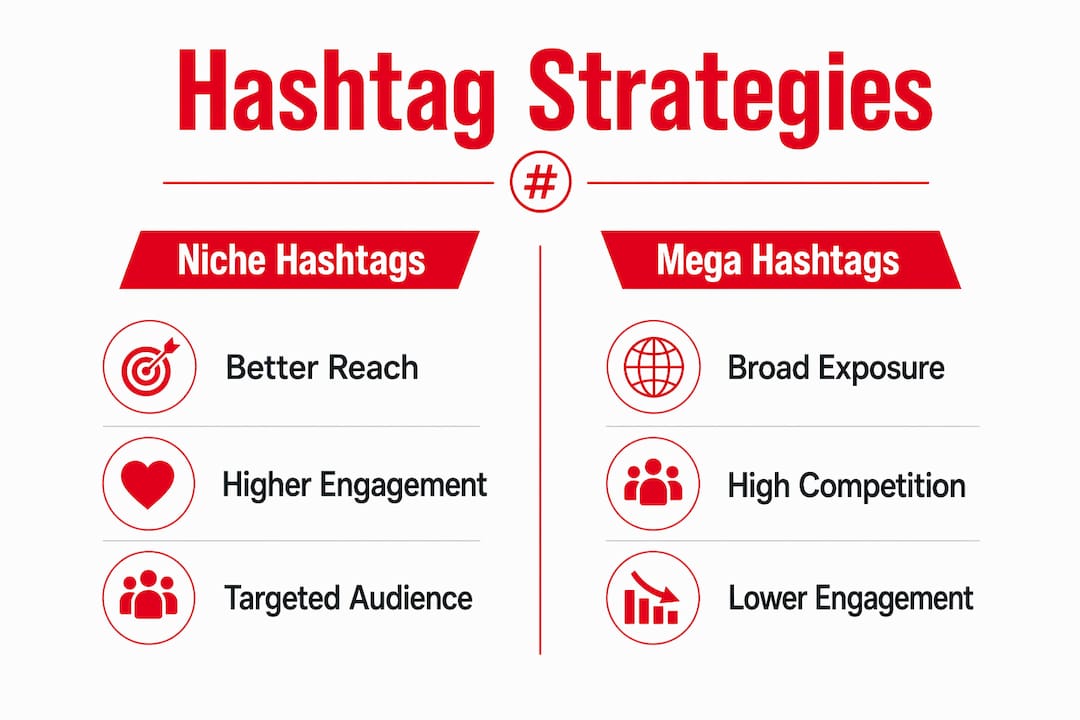
The niche versus mega hashtag debate has a clear answer. Niche hashtags outperform mega hashtags by roughly 3x on the reach-to-engagement ratio. A post tagged with #FitnessCoach reaches a smaller but far more qualified audience than one tagged with #Fitness, which has hundreds of millions of posts competing for attention. For brands building real community, niche tags deliver better results.

Branded hashtags deserve their own category. A tag like #SogrowGrowth or Nike's #JustDoIt does three things at once: it organizes your content library, invites followers to participate, and creates a searchable community hub. Campaigns using dedicated hashtags increase brand favorability by 18% and improve click-through rates on social ads by 20%. That is a measurable return on a free tactic.
Key mechanisms driving hashtag-based discoverability:
- Algorithmic categorization: Hashtags confirm topic relevance when they match caption language, which strengthens content ranking signals.
- Explore page placement: Instagram's Explore page surfaces content based on hashtag relevance and engagement velocity in the first hour after posting.
- Community following: Users can follow specific hashtags on Instagram, meaning your posts can appear in feeds of people who have never seen your account.
- Cross-platform consistency: 70% of digital marketers consider hashtags essential for cross-platform consistency, reinforcing brand identity across Instagram, LinkedIn, and TikTok simultaneously.
What are the best hashtag strategies for sustainable brand growth?
A tiered hashtag approach is the most reliable framework for consistent organic growth. This means mixing three types of tags in every post: branded hashtags unique to your company, niche hashtags specific to your content category, and broad hashtags that connect to wider conversations. A tiered strategy mixing branded, niche, and broad hashtags consistently outperforms unfocused tagging because it captures multiple audience layers at once.
Here is how to build a tiered hashtag set for a single Instagram post:
- Start with 1–2 branded hashtags. These anchor every post to your brand identity and build a searchable archive over time. Examples: #YourBrandName or a campaign-specific tag like #YourBrandChallenge.
- Add 2–3 niche hashtags. These should reflect the specific topic of the post, not just your industry. A fitness brand posting a meal prep video should use #MealPrepSunday, not just #Health.
- Include 1–2 broad hashtags. These connect your content to larger conversations. Use them sparingly. One broad tag like #Wellness gives context without drowning your post in competition.
- Research every hashtag before using it. Check the tag's history, recent posts, and associated content. Poor hashtag choices can associate brands with controversies that damage trust and increase future acquisition costs. A tag that looks neutral may carry negative connotations in certain communities.
- Audit your hashtag set monthly. Trending tags shift. A hashtag that drove strong reach in January may be oversaturated or associated with different content by March.
Pro Tip: Before launching any campaign hashtag, search it on Instagram and Twitter to review the last 50 posts. If the content is off-brand, controversial, or unrelated, choose a different tag. This five-minute check prevents reputation damage that takes months to repair.
The most common mistake brands make is using the Instagram maximum of 30 tags, which typically reduces engagement compared to a curated 3–5 tag approach. Instagram's algorithm interprets excessive tagging as spammy behavior and deprioritizes that content. More tags do not mean more reach. They mean less.
Hashtags also function as public commitments. Successful hashtag strategies require viewing hashtags as commitments aligned with brand values. When a brand uses a social cause hashtag without backing it with real action, audiences notice. That transparency backfire erodes trust faster than any algorithm change.
How have recent algorithm changes impacted hashtags in 2026?
The role hashtags play in content ranking has shifted significantly over the past two years. Algorithms now prioritize captions, engagement, and multimedia over tags alone for content ranking. Hashtags have moved from primary discovery drivers to secondary context signals. This is a meaningful distinction for how you allocate your content effort.
The practical implication is that a strong caption now does more for your reach than a long list of hashtags. Instagram reads the full text of your caption to understand content relevance. Hashtags that match your caption language reinforce that signal. Hashtags that contradict or are unrelated to your caption confuse the algorithm and reduce ranking.
Here is how hashtag importance varies by platform in 2026:
| Platform | Hashtag importance | Primary discovery driver |
|---|---|---|
| High | Hashtags + caption alignment | |
| TikTok | Medium | Video content + sound trends |
| Medium | Keywords in caption text | |
| X (Twitter) | Declining | Real-time search and trending topics |
| Low | Visual search and keyword boards |
Instagram remains the platform where hashtags deliver the most measurable impact for brand accounts. TikTok's branded hashtag challenges still generate strong results. Branded hashtag challenges on TikTok achieve a median engagement rate of 17.5%. That figure reflects how well structured hashtag campaigns perform when the format matches the platform's native behavior.
On X, hashtag importance has declined sharply. The platform's algorithm now favors real-time engagement signals over tag-based categorization. For brands focused on Instagram growth, this shift reinforces where to concentrate hashtag strategy effort.
The power of hashtags in social media marketing still holds, but the execution has to match the current algorithmic environment. Treating hashtags as your only growth lever is a 2019 strategy. Treating them as one well-calibrated signal within a broader content approach is what works in 2026.
How can brands measure and optimize hashtag performance?
Measurement is where most brands fall short on hashtag strategy. 41% of marketers track campaign returns via hashtags, which means the majority are running hashtag campaigns without knowing what is working. That is a significant missed opportunity for optimization.
The metrics that matter most for hashtag performance are:
- Reach per hashtag: Instagram Insights shows which specific hashtags drove impressions. Review this data after every post to identify your top performers.
- Engagement rate by tag set: Compare engagement rates across posts using different hashtag combinations. This reveals which tag mixes resonate with your audience.
- User-generated content volume: Track how many posts use your branded hashtag each week. Growth in UGC signals that your community is expanding organically.
- Brand favorability and sentiment: Monitor the tone of conversations around your branded hashtag. Tools like Sprout Social and Brandwatch surface sentiment trends that raw engagement numbers miss.
- Social commerce conversion: Branded hashtags increase social commerce conversion rates by 70% when linked to shoppable posts. Track click-through rates from hashtag-driven traffic to product pages.
Pro Tip: Create a simple tracking spreadsheet with three columns: hashtag used, post engagement rate, and reach from hashtag. After 30 posts, patterns emerge clearly. You will see which tags consistently outperform and which ones add no value. Cut the underperformers and double down on what works.
Linking hashtag performance to campaign ROI requires connecting your social analytics to your conversion data. If you run a product launch with a dedicated hashtag, track not just engagement but also website traffic spikes, email sign-ups, and sales during the campaign window. 22% of brands create new hashtags per product launch for community activation, and those brands are best positioned to measure direct revenue impact.
The marketing trends shaping 2026 point toward tighter integration between hashtag campaigns and measurable business outcomes. Brands that treat hashtags as a branding tool with trackable ROI will outperform those that use them casually.
Key takeaways
Hashtags drive brand growth when used with precision, platform awareness, and consistent measurement rather than volume or trend chasing.
| Point | Details |
|---|---|
| Precision beats volume | A curated set of 3–5 hashtags outperforms 30 tags and avoids algorithm spam penalties. |
| Tiered strategy wins | Mix branded, niche, and broad hashtags in every post to capture multiple audience layers. |
| Captions now lead | Algorithms prioritize caption language over tags; hashtags confirm relevance, not create it. |
| Measure what matters | Track reach per hashtag, UGC volume, and conversion rates to optimize over time. |
| Research before posting | Always check a hashtag's history and sentiment before using it to protect brand trust. |
Why I stopped chasing hashtag volume years ago
I spent the first part of my career watching brands obsess over hashtag counts. The logic seemed reasonable: more tags equal more chances to be discovered. The data proved that wrong, and I have not looked back since.
The shift that changed my thinking was watching a mid-size fitness brand triple their engagement rate after cutting from 25 hashtags per post down to 5. They did not change their content. They did not post more frequently. They just got precise. That result is not unusual. It reflects how Instagram's algorithm actually works versus how most marketers assume it works.
What I find most underestimated is the reputational risk of careless hashtag use. Brands spend months building trust and then attach a trending hashtag without checking its context. The backlash is fast and public. Researching hashtag sentiment is not optional due diligence. It is basic brand protection.
My honest recommendation: treat your branded hashtag like a product. Name it carefully, use it consistently, and build content around it with intention. When your community starts using it without prompting, that is the signal that your hashtag strategy is working at the level it should.
— Zen
How Sogrow helps brands build smarter hashtag strategies
Knowing the right hashtag strategy is one thing. Executing it consistently while tracking what actually drives growth is another challenge entirely.
Sogrow's AI-powered platform takes the guesswork out of Instagram organic growth by identifying which content and hashtag combinations attract real, engaged followers in your niche. Brands using Sogrow have grown from 2,000 to 18,000 followers and tripled engagement rates within weeks, not by gaming the algorithm but by connecting with audiences who genuinely want their content. If you are ready to turn your hashtag strategy into measurable follower growth, Sogrow gives you the tools to make that happen.
FAQ
What is the role of hashtags in brand growth?
Hashtags categorize content so the right audiences can find it, directly increasing discoverability, engagement, and community size. Branded hashtags also increase user-generated content by 4.5x, compounding organic reach over time.
How many hashtags should a brand use on Instagram?
Research shows that 3–5 targeted hashtags deliver the best results for most brand accounts. Using the maximum 30 tags typically reduces engagement because Instagram's algorithm treats excessive tagging as a spam signal.
Do hashtags still work in 2026?
Hashtags remain effective on Instagram and TikTok, though their role has shifted. Algorithms now use hashtags as secondary context signals that confirm caption relevance rather than as the primary driver of content discovery.
How do I measure hashtag performance?
Track reach per hashtag using Instagram Insights, monitor engagement rates across different tag combinations, and measure UGC volume for branded hashtags. Linking hashtag campaigns to conversion data shows direct ROI impact.
What makes a hashtag strategy effective for brand awareness?
An effective strategy mixes branded, niche, and broad hashtags in a tiered approach, researches each tag's sentiment before use, and aligns hashtag language with caption content to strengthen algorithmic relevance signals.